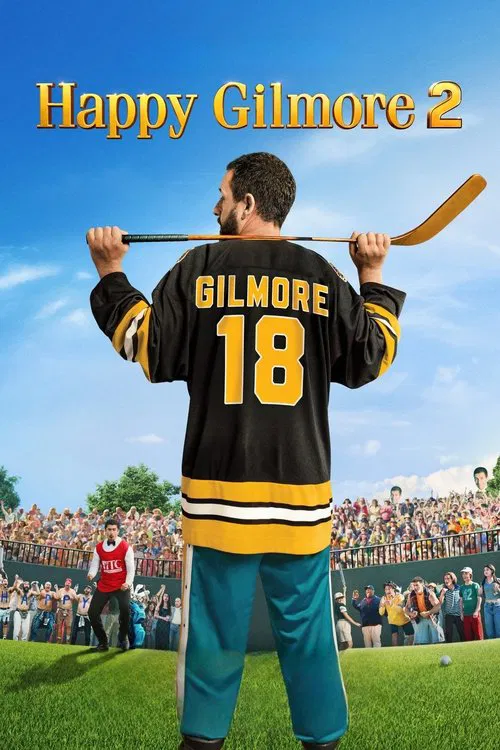
Adam Sandler dusts off the 9-iron for a sequel that few asked for but plenty will click on anyway. Sandler is doing Netflix a solid—a movie I’m sure made millions of its subscribers feel slightly better about the latest price hike. Nostalgia is the hook here. All the better if it comes with a smorgasbord of broadly staged pratfalls, low-hanging beer guts, and sports-centric rage.
The original Happy Gilmore wasn’t exactly precision comedy. But it was loud and strange, and perhaps most importantly it stuck with you. This sequel is looser and flabbier. It seems almost as if it’s proud of how little it cares about developing its own narrative. It has a bare-bones plot, but it mostly serves as a frame through which a shuffling Rolodex takes us through a roll call of cameos and callbacks—both living and dead. They appear, dutifully set themselves up for an efficient punchline, and then quickly clear the stage for the next one.
The film opens catching us up. Happy (Sandler) got married to Virginia (Julie Bowen), had kids, and briefly tried out adulthood. It seemed to be going well until a freak golfing accident kills Virginia. Devastated, he plunges into tabloid infamy and full-time alcoholism. Next, of course, comes the inevitable redemption arc. And while most movies wouldn’t depict a character smashing windows and barking at opponents as character improvement, it does here—especially when combined with showing off that wicked backswing.
It’s not as funny as the original, but that’s no surprise, and the movie seems fully aware of it anyway. There are enough laughs to make this worthwhile, but they only come in fits and starts. There’s an occasional line that lands, a visual gag that’ll make you strike a smile, or a particularly surprising cameo. But as with many of Sandler’s comedies, too many jokes feel lazy. And the handful that work remind you of why the original film stuck in the culture in the first place. For anyone who grew up on Sandler yelling at golf balls and punching Bob Barker, this might just hit your sweet spot. It’s hardly a movie you need, and you might not remember it tomorrow, but for two hours it feels almost like 1996 again.