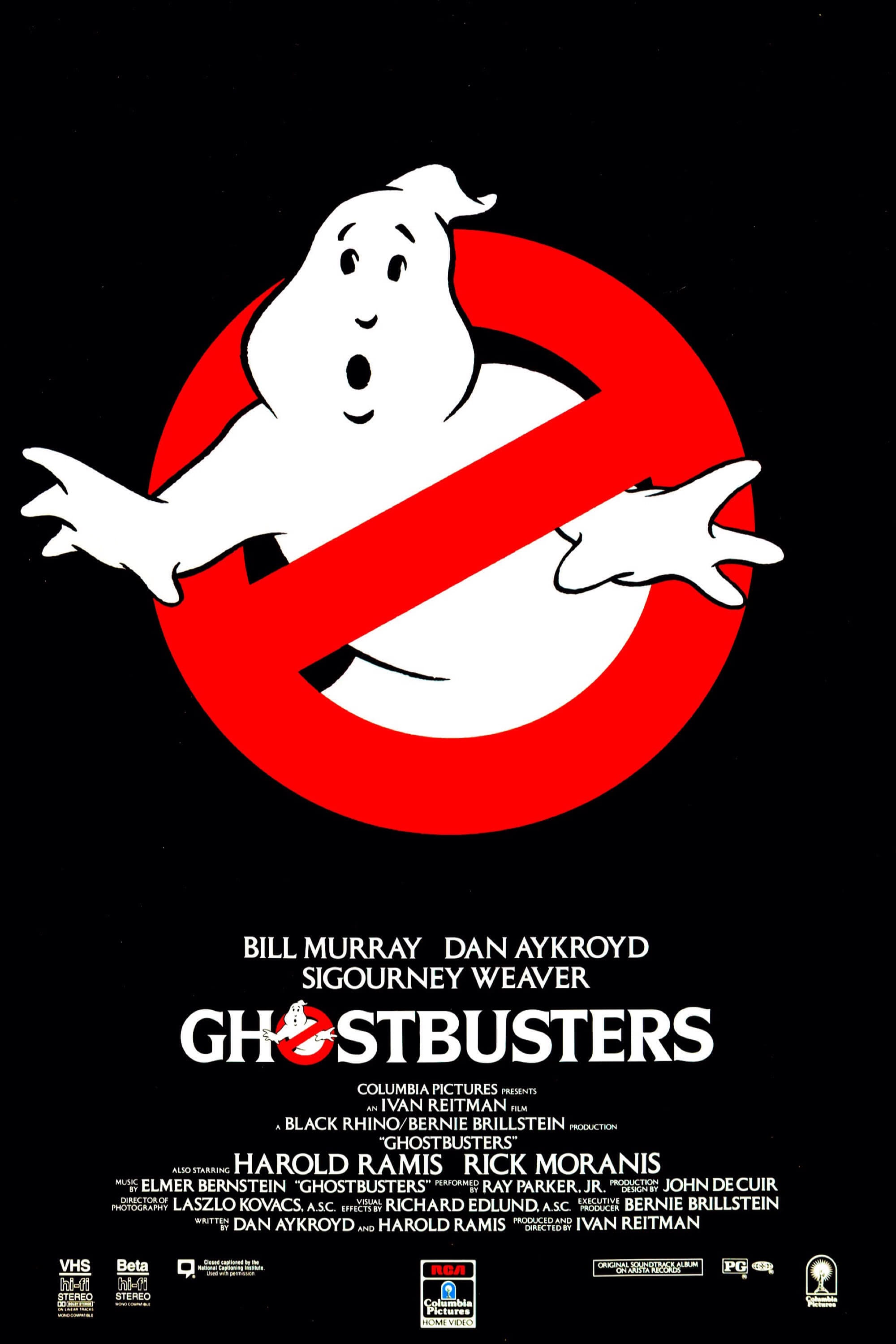
New York City of the mid-1980s is about to get a new addition to its service economy that it doesn’t even know it needs, and it’s coming courtesy of three disgraced academics armed with proton packs and no business plan. They are the Ghostbusters, of course—three parapsychologists: Peter Venkman (Bill Murray), Ray Stantz (Dan Aykroyd), and Egon Spengler (Harold Ramis), who recently lost their funding at Columbia University. Instead of fading into the twilight of academic obscurity, they decide to pull themselves up by their proverbial pocket protectors and go into business, protecting denizens from these supernatural, see-through ghouls.
They aren’t con artists, by the way. Ghosts are not only real, but their activity has been increasing lately. One of the first entities they encounter is a haunted librarian whose only annoyance at being dead, it seems, is having to shush all the screams from unsuspecting researchers and readers as they flee. That includes the Ghostbusters themselves. They don’t actually capture their first ghost until they encounter Slimer in an old hotel—a green, gluttonous blob that stuffs food down its gullet, but it passes straight through him. The Ghostbusters develop their own (unregulated) equipment, but that’s really the easy part. The hard part is becoming proficient at using it.
It turns out that this sudden influx of spectral activity isn’t random. It’s all a byproduct of a demonic force that’s gathering power. Its chosen vessel happens to be Dana Barrett (Sigourney Weaver), a cellist. And suddenly the Ghostbusters—who had been winging it the entire time—are now expected to save the world.
This is a comedy that treats the supernatural with an intoxicating mixture of spectacle and irreverence. It works as well as it does because of the sharp writing, but what makes it unforgettable are the actors. Bill Murray slouches through the film like a con artist who got his PhD by mistake. Aykroyd is the overgrown Boy Scout of the paranormal. Ramis is quietly hilarious with a deadpan delivery as the film’s backbone. Ernie Hudson arrives later as Winston, the only one who treats ghostbusting like a regular job, finding himself more exasperated than awe-inspired when he learns he’s riding shotgun for the apocalypse. And last but not least, Rick Moranis as an overcaffeinated, nebbish accountant whose every twitch makes me giggle—for example, the way his voice cracks after realizing he was locked out of his own apartment during a party he’s hosting.
And it all culminates in a satisfying conclusion, with a demon named Gozer (looking like a punked-up demigod of VHS aerobic workout videos) and a behemoth—the Stay Puft Marshmallow Man, 50 feet of pure, doughy menace who stomps through Manhattan like an overgrown parade balloon gone rogue.
This is a film that not only believes in itself but knows how to smirk at itself, too. The ghosts exist to be caught. The Ghostbusters exist to be funny. And Ghostbusters is still massively popular with audiences precisely because this concoction has never stopped working.