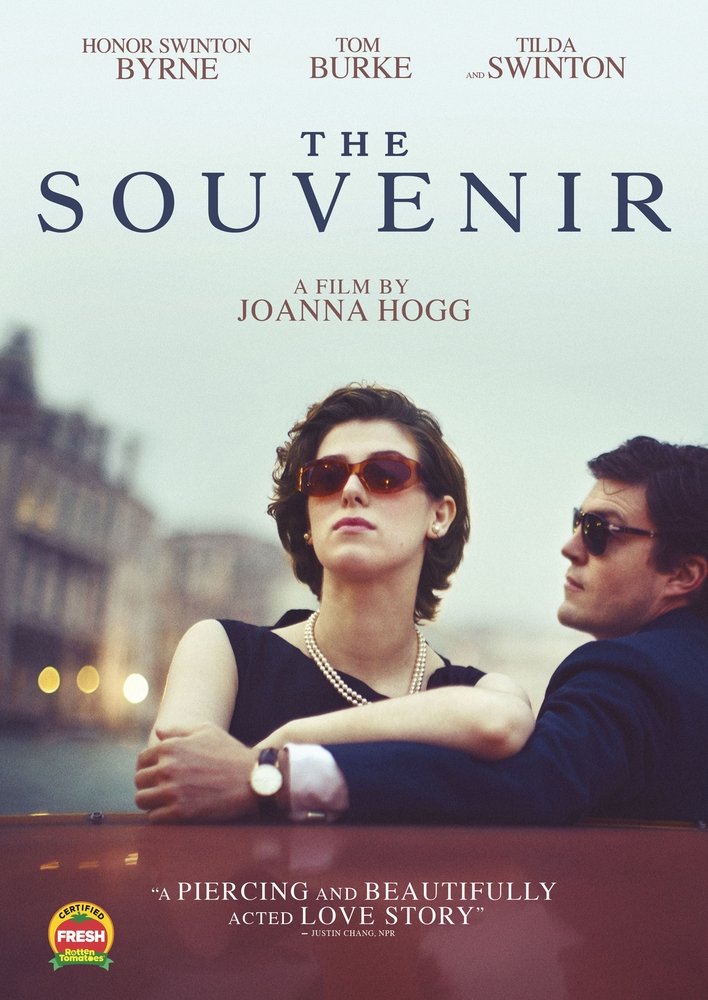
A quiet, airless, semi-autobiographical drama that drifts in like smoke so thin you only notice it once you see what it’s been corroding. Writer-director Joanna Hogg brings us this film that has no interest in tidiness or obvious payoffs. It asks for patience. And the reward is a film that feels tender and precise. But it also feels merciless in its depiction of a poisonous romance.
Honor Swinton Byrne plays Julie, a shy student who has money and a Knightsbridge flat. Her artistic temperament is still in its early phases. She has ambition but doesn’t yet know what she wants to say. Her somewhat aimless existence seems to find some kind of meaning when an older man named Anthony (Tom Burke) falls into her orbit. There’s a cultivated detachment about him that can pass for sophistication. By profession, he works for the Foreign Office—or at least claims to. He speaks with a grim intellectual gravity and is able to guide her through museums as if culture itself were his possession. He’s charming, even though he quietly telegraphs “bad idea” to everyone. That is, except of course for Julie, who is too stricken to see any of it. They find a mutual fascination studying The Souvenir by Jean-Honoré Fragonard, a painting that becomes their private metaphor for a love neither of them can define.
But where there is a rise, there is the inevitable fall—even in art-house cinema. The cracks start to widen. Anthony asks to borrow money. He will occasionally disappear into bathrooms for long stretches. His once-polished ability to explain his erratic behavior begins to unravel. He grows manipulative. And then Julie starts to realize that this man isn’t enigmatic at all. He’s addicted to heroin. Has been all this time, but he’s become less effective at hiding it. And by this time, it’s already too late. Her life has bent toward his, and there’s no neat way of undoing it.
Hogg resists melodrama, instead letting the film accumulate through small, spare scenes that feel like diary entries. Swinton Byrne’s gentle bewilderment and Burke’s slippery evasions carry it, backed by a script that’s exact, almost forensic in its emotional calibration.
By the end, this isn’t so much a romance as it is an autopsy of one—where intelligence is mistaken for depth and love drifts into submission before you even notice the shift. And by the time you do, the cost has already been collected.