THE FADED SPOTLIGHT

by Michael Lawrence

List of "T" Movies


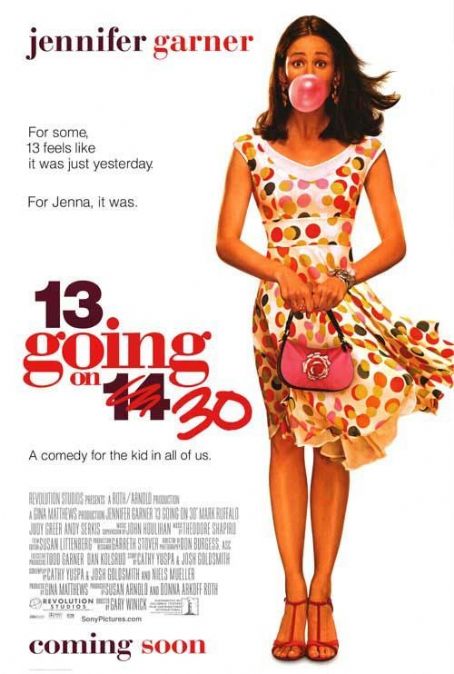
13 Going on 30 (2004) Poster
13 GOING ON 30 (2004) C
dir. Gary Winick

A harmless retread of Big—dressed in lip gloss and magazine layouts. 13 Going on 30 moves briskly but is purely surface-level entertainment. Polished to a shine, but empty inside.

Jennifer Garner plays Jenna, a teenager in 1986 who—after one humiliation too many—wishes to be “thirty, flirty, and thriving.” And she gets her wish. She wakes up, and it’s 2004 and she discovers she has a high-powered job in fashion media, a corner office, and absolutely no memory of the seventeen years she skipped.

Jenna quickly learns that her adult self is kind of awful. She’s cold to her parents. Cutthroat at work. Sleeps with men she doesn’t even like. She has to slowly figure out the controls to run a life that she never built.

Jenna grabs at the one thing from her old life that still feels real to help orient her—her best friend Matt (Mark Ruffalo), now a photographer who has more bills than gigs. He opens the door to see this old familiar face (who he once had a crush on, of course) and nearly short-circuits. But give him about thirty seconds. Once he processes it, he buys into the story like it isn’t even the weirdest thing to happen to him that week.

The setup is fine. The spin on the fish-out-of-water thing is just clever enough to stay afloat. The inevitable romantic subplot between Garner and Ruffalo is about as convincing as Tuesday night’s latest Hallmark release. But what really keeps the film alive is Garner’s performance, playing her role exactly the way she should—like a kid sneaking into adulthood for the first time. Her heels seem too big, sentences feel awkwardly formed, and her big eyes take everything in. All the other characters exist mainly to hover in her periphery. They’ll react, explain, or deliver a quip, then vanish entirely from the scene.

As harmless and likable as this movie is, I felt unmoved. More numb than amused. I didn’t laugh and barely even smiled. The whole thing feels like it’s been test-screened into politeness. But at least it moves fast and knows when to quit. And the one thing everyone remembers from this movie—the Thriller dance number—is a fun diversion.
Starring: Jennifer Garner, Mark Ruffalo, Judy Greer, Andy Serkis, Kathy Baker, Phil Reeves, Samuel Ball, Marcia de Bonis, Christa B. Allen, Sean Marquette, Kiersten Warren, Lynn Collins.
Rated PG-13. Sony Pictures Releasing. USA. 98 mins.
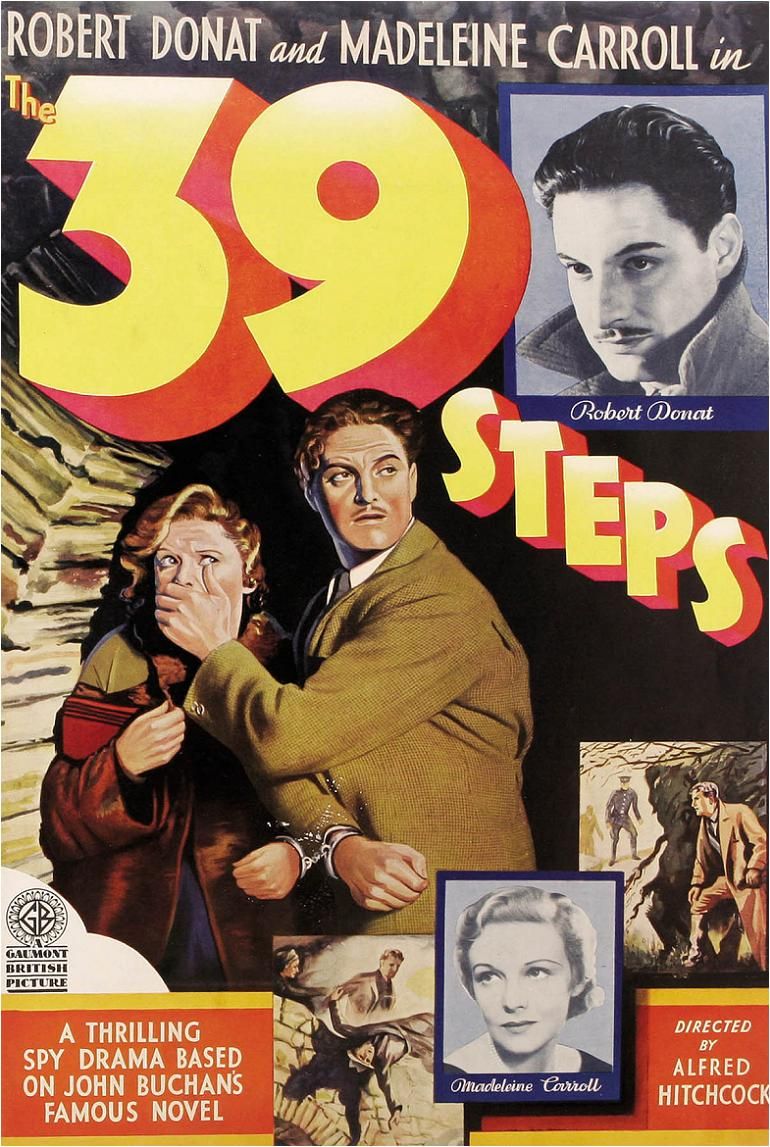
The 39 Steps (1935) Poster
THE 39 STEPS (1935) A
dir. Alfred Hitchcock

Before Hitchcock became Hitchcock™—master of suspense, collector of blondes—he made this. A brisk, clever thriller that helped invent the modern spy movie. And it didn’t even need to loosen its tie.

You know the setup. A regular man, minding his business, brushing up against the wrong secret. And suddenly he finds himself hunted from both ends—the cops who think he’s a killer and the real killers—spies—who think he knows too much. This is Hitchcock early on, but the taut, playful style is already here. The film feels light on its feet but wired tight underneath. What makes the movie immediately compelling is that we can relate to the character. This man is ordinary, polite, and completely unprepared for what’s coming. He could be any of us.

His name is Richard Hannay (Robert Donat)—a man so neat and composed that he’s probably never even missed a train. It happens one night at a London music hall. A gunshot cuts through the laughter. Panic follows. And in the scuffle, he escorts a nervous woman (Lucie Mannheim) to safety. Or at least what looks like safety. She claims that she’s a spy. She mutters something about “The 39 Steps,” and before she can elaborate further, she’s dead. Just like that. And then Hannay bolts for Scotland with half the country on his heels and happens to rope in one unimpressed blonde (Madeleine Carroll) along the way. (He ducks into her train compartment and kisses her, hoping to throw off the cops.)

What makes the movie sing isn’t the mystery—it’s the rhythm. It keeps flipping tones like a deck of cards: thriller, screwball, reluctant romance. A chase across the moors here, a train escape there. There’s even a political rally that turns into a one-man show when Hannay’s mistaken for the speaker. He fakes it, the crowd buys it, and the film barely pauses to laugh.

You can already see Hitchcock’s favorite tricks coming together. The wrong man finding himself in the right disaster, and a world that doesn’t even look up while it grinds him down. The 39 Steps isn’t quite his masterpiece, but it’s close enough to breathe the same air. Quick. Smart. A little cruel. The work of a director already certain of his control—and ours. Directors have been trying to chase this ever since, but most come up short. And out of breath.

Starring: Robert Donat, Madeleine Carroll, Lucie Mannheim, Godfrey Tearle.
Not Rated. Gaumont-British. UK. 86 mins.
The Thomas Crown Affair (1968) Poster
THE THOMAS CROWN AFFAIR (1968) B
dir. Norman Jewison

A heist film so polished that it might just blind you with the reflection of its own pristine shine. An iconic role for Steve McQueen who plays Thomas Crown, a rich but terminally bored financier. He’s already bought everything he could ever want—except for a little danger and challenge. He sets his sights on bank robbery. The Boston Mercantile Bank, to be exact—an institution as virtually impenetrable as it sounds. Of course, the payout isn’t about money for Thomas Crown; it’s about nerve, precision, proof to himself that he can pull it off and get away clean. He loves the neatness of the heist—leaving behind no fingerprints and no witnesses. He doesn’t even leave behind a motive worth mentioning. He just likes the rush.

Norman Jewison shoots the heist like choreography. The use of split-screen here is now iconic—so much so that whenever you see it in another film, it’s immediately compared to The Thomas Crown Affair. Smaller frames sit inside the larger one, turning the intricate moments of the crime into a collage of motion: dances of stopwatches, innocent strangers noticing something amiss, intersecting angles of Crown pulling off one trick after another. It’s little more than the movie showing off, but it knows exactly how good it looks doing it.

Once the crime’s complete, the energy slackens. Enter Faye Dunaway as Vicki Anderson. She’s an insurance investigator with wry detachment and a near-clinical interest in her suspect. She pegs Crown as the culprit from the start. But to know for sure, she’ll have to somehow find her way inside Crown’s brick wall exterior.

What follows isn’t a mystery. It’s more like a slow burn with a romantic undercurrent. Their so-called psychological duel plays out mostly over cocktails and chess. It all looks elegant, but the tension between them feels rather too neat. These are the moments when The Thomas Crown Affair loses its edge—when it falls for its own characters. These ones are so detached and emotionally cold you might as well confuse them for coat racks.

Still, the film knows how to hypnotize. The glider scene really shows us all we need to know about what’s going on inside Crown’s mind: him making idle loops through the sky while “The Windmills of Your Mind” spins its melancholy tune. There, he’s courting danger, or at least pretending to. Given how gracefully he performs these tricks, though, you do wonder how much risk he’s really taking.

While it’s all a bit too shallow for its own good, The Thomas Crown Affair is a unique confection. Too cool to care, too pretty to matter. That’s really the fun of it. Late-’60s style as self-portrait. Crime polished into fashion. And the sandy-haired Steve McQueen at the center of it all with his plain grin and tailored suit.

Starring: Steve McQueen, Faye Dunaway, Paul Burke, Jack Weston, Biff McGuire, Yaphet Kotto.
Rated R. United Artists. USA. 102 mins.