THE FADED SPOTLIGHT

by Michael Lawrence

List of "L" Movies


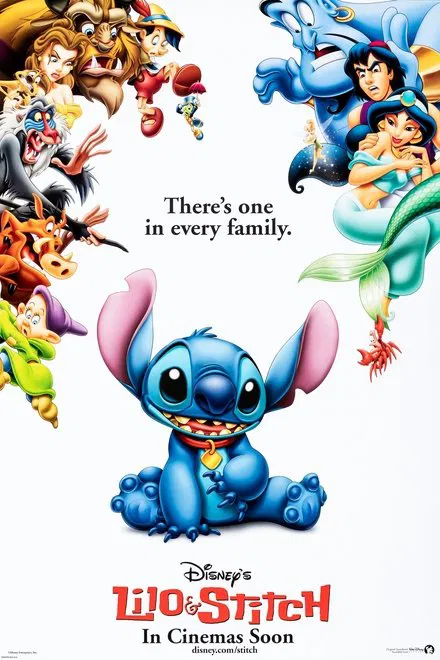
Lilo & Stitch (2002) Poster
LILO & STITCH (2002) B+
dir. Chris Sanders & Dean DeBlois

A 2D animated feature from Disney’s main division, Lilo & Stitch marked a brief departure from the studio’s usual polish. This film is rougher, stranger, and more willing to follow impulses that felt closer in spirit to early-2000s Nickelodeon than to Disney’s own spotless legacy. For once, that wasn’t a bad instinct.

Stitch isn’t from a planet of misfits—he is the misfit from his planet. A genetic experiment gone rogue, designed for destruction and engineered in a lab by a mad scientist named Jumba. He looks something like a blue koala with six limbs (two of which he folds away when he needs to pass as Earth-appropriate). He has oversized ears with pieces missing, and the temperament of a toddler with the strength of a WWE wrestler. Whatever took that bite out of his ear, the film wisely doesn’t show us.

After breaking loose and crash-landing in Hawaii, Stitch winds up in an animal shelter. He’s mangy, furious, and mislabeled as a dog. Enter Lilo: a lonely and nearly feral kid who has an Elvis obsession and a gift for making adults nervous. Lilo and Stitch’s bond doesn’t come easy. It isn’t love at first sight as much as it’s mutual recognition. These are two trouble cases nobody in their respective communities knows what to do with. But they learn to have each other.

The animation feels looser and less disciplined than the studio standard, but that’s a good thing here. Watercolor backgrounds, soft character designs, and none of the forced gloss. Stitch feels a bit like he was inspired by Gremlins—volatile and chaotic but also hesitates just long enough to wonder why he wrecks things. The film moves with a kind of cheerful disorder, but underneath, its foundation is solid. Like most Disney stories, it circles back to wholesome things—especially family. Even if the idea comes scuffed, bitten, and half-sincere.

Lilo & Stitch might not be prestige Disney, but it hits what it was aiming for—funny, volatile, and it goes fully tender. It doesn’t reach for timelessness, even if some audiences’ memories of it might be timeless, but it’s entertaining and it’s lively.
Voices of: Daveigh Chase, Chris Sanders, Tia Carrere, David Ogden Stiers, Kevin McDonald, Ving Rhames, Kevin Michael Richardson, Zoe Caldwell, Jason Scott Lee, Miranda Paige Walls.
Rated PG. Walt Disney Pictures. USA. 85 mins.
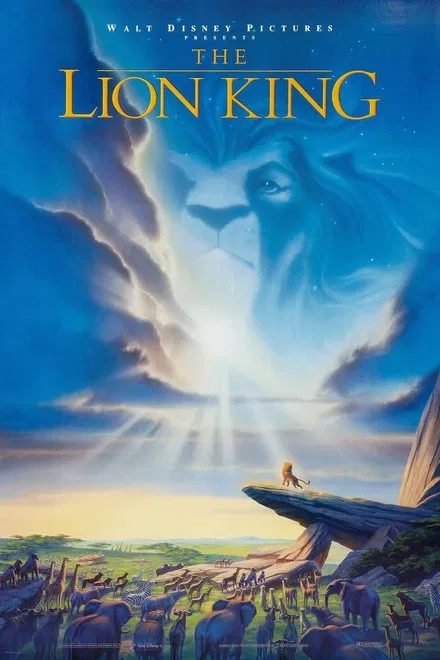
The Lion King (1994) Poster
THE LION KING (1994) A
dir. Roger Allers & Rob Minkoff

Shakespeare in fur—and the last undisputed triumph of Disney’s so-called Renaissance, the studio’s second golden age that began with The Little Mermaid. The setting is Africa—a version of it without a single human footprint. Lions are monarchs who rule the savanna. Every creature—even, seemingly, the grass—bends to their hierarchy. The lions do eat some of their subjects, but that’s fine. There’s a song about it. It’s called “Circle of Life.”

The reigning king is Mufasa—voiced by James Earl Jones, whose godlike bass could part clouds—and often does. He welcomes the birth of his cub, Simba (Jonathan Taylor Thomas), heir apparent to the throne. And everything couldn’t be more perfect. The sunrise blazes. Giraffes kneel. Choirs swell. Scar—Jeremy Irons—is bile and velvet. He decides that the throne would look better under him.

The plot, borrowed from Hamlet, hits its mid-act climax in a gorge, a stampede, and a betrayal—all staged with a kind of operatic cruelty. Mufasa doesn’t survive. Simba wasn’t supposed to either, but he does. He vanishes into exile.

Then he grows up, raised by two inseparable jungle wiseguys—a meerkat and a warthog—who call themselves Timon and Pumbaa (Nathan Lane and Ernie Sabella). They introduce themselves to Simba with their signature song, “Hakuna Matata,” a phrase they tell us means “no worries.” A catchy melody but an even catchier philosophy. Simba’s new happy-go-lucky existence eventually starts to feel like it might be temporary. He grows a mane. His voice drops (now he’s Matthew Broderick). And the past, being what it is, doesn’t stay buried. Memory surfaces—through ghosts, through music, through those still waiting, hoping, for his return. Of course, the kingdom has fallen into ruin under the reign of Scar.

The animation is impeccable: widescreen vistas, painterly skies, animal movement that never loses weight or grace. Elton John and Tim Rice’s songs do the work that even a thousand lines of dialogue can’t—“I Just Can’t Wait to Be King,” “Can You Feel the Love Tonight.” These are the kinds of pop anthems that colonized radio stations and childhoods alike.

The Lion King is everything—exhilarating, melancholy, and mythic—all without ever losing its weight. And somehow, it still finds room for the silly and the small. Timon and Pumbaa, in particular, might be the most enduring side characters Disney ever came up with. While this is clearly a movie engineered for greatness, it’s too well-made to fail—and too alive to feel manufactured. Grandiose, gripping, and joyous, it’s a movie that aimed for the clouds—and made it.

Voices of: Matthew Broderick, James Earl Jones, Jeremy Irons, Moira Kelly, Nathan Lane, Ernie Sabella, Rowan Atkinson, Robert Guillaume, Madge Sinclair, Jonathan Taylor Thomas, Whoopi Goldberg, Cheech Marin, Jim Cummings.
Rated G. Walt Disney Pictures. USA. 88 mins.
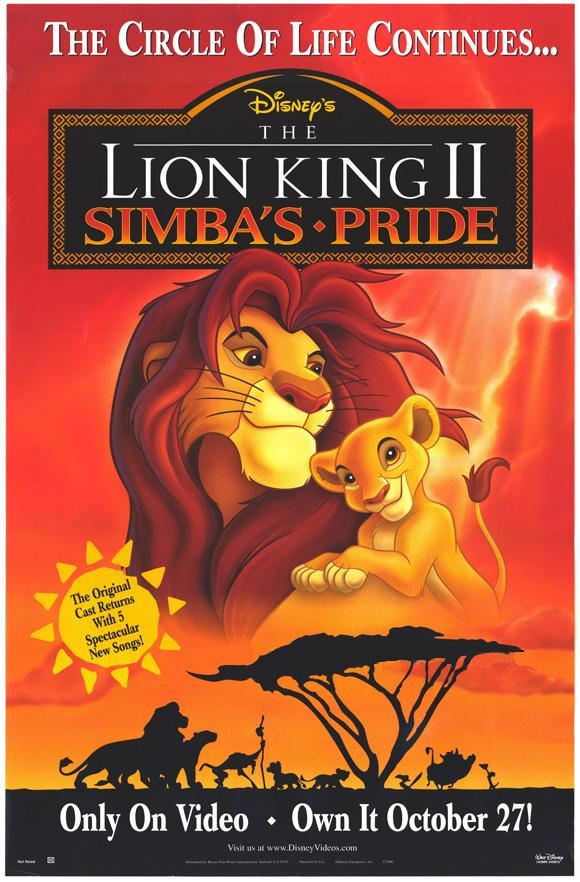
The Lion King II: Simba’s Pride (1998) Poster
THE LION KING II: SIMBA’S PRIDE (1998) B+
dir. Darrell Rooney, Rob LaDuca

By the ‘90s, Disney’s direct-to-video sequels were less creative gambles than corporate reflexes. Follow-ups to beloved Disney fixtures stamped out with skeleton teams—bare-bones animation, half-baked storylines, terrible music. Generally, things designed to be just enough to snag $20 bills out of mothers’ purses during the big releases. And their children will watch it and perhaps even enjoy it a few times—when they want something familiar but new.

So the surprise of The Lion King II: Simba’s Pride isn’t just that it’s watchable. It’s that it’s good. Unusually good. Not nearly as good as the first film. Hardly anything is. But this is a sequel that, for once, doesn’t feel like a cheap-quel. More like a continuation, even if you can tell pretty starkly that it was made for merely a fraction of the original’s budget.

We’re back at Pride Rock, with Simba now in the Mufasa role. He’s older, stricter, and weighed down by legacy. His daughter, Kiara, is a chip off the old block, though—not interested in royal protocol so much as sneaking beyond the borders of the kingdom. And it’s there she meets Kovu, a brooding outcast raised by Scar’s loyalists. She doesn’t meet him by chance; he’s been groomed to avenge Scar. Charming Kiara is supposed to be his way into infiltrating the pride. But things don’t go as planned when he actually falls for her. Of course.

The basis of the story is familiar. The first Lion King was a fur-based version of Hamlet, whereas this sequel takes on Romeo & Juliet. Star-crossed heirs, rival bloodlines, the sins of fathers. It’s far more sophisticated than the usual direct-to-video fare. The emotions have texture. There are subplots that hit with unexpected sincerity—like Kiara trying to balance duty with desire. Maybe more importantly, it’s all quite engaging. Of course, it doesn’t hold a candle to the original, but it’s surprisingly in the ballpark.

Old favorites are back. Timon and Pumbaa still wander in as comic relief. They run their usual two-man circus at the story’s edge. They talk too much, but they still have timing—and that’s why we love them. Maybe the biggest surprise of all is the music—usually the scourge of the direct-to-video sequel, but it soars here. Especially the key song “He Lives in You” (borrowed from the Rhythm of the Pride Lands album), which is grand enough to almost hide the dip in budget.

While the animation is decidedly flatter and the lines less refined, the grandeur is scaled down from Broadway to roadshow. But plenty of care went into this, and it shows. If The Lion King was sunlight, Simba’s Pride is the afterglow—smaller and dimmer, but still burning.

Starring: Matthew Broderick, Neve Campbell, Jason Marsden, Suzanne Pleshette, Andy Dick, Robert Guillaume, Ernie Sabella, Nathan Lane.
Rated G. Walt Disney Home Video. USA. 81 mins.
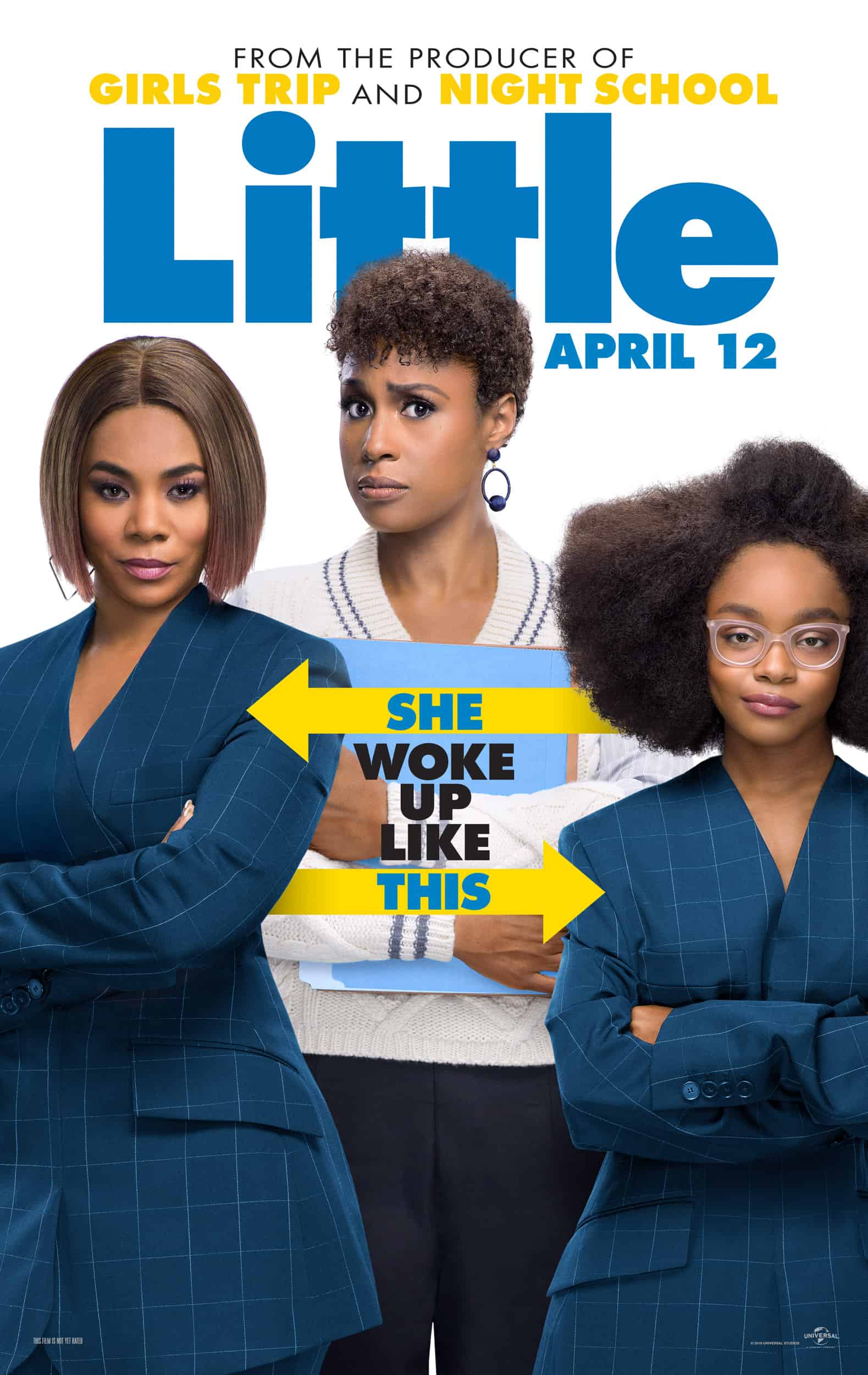
Little (2019) Poster
LITTLE (2019) C−
dir. Tina Gordon

Another entry in Hollywood’s “forced to grow up—again” arsenal. This time it’s Jordan (Regina Hall), a tyrannical tech mogul who insults the wrong magic-wand-wielding tween and wakes up the next morning young again. And I’m not talking about the good kind of young where you get your springy skin back. Here she’s thirteen and awkward. Hormonal and powerless. Yelling in a crowded room no longer stops people’s hearts. It’s a little kid having a tantrum.

Barred from her own office tower on account of needing to go to school, this fun-sized mogul leaves her kingdom in the trembling hands of April (Issa Rae), her long-suffering assistant. The sudden bump in status doesn’t erase years of verbal paper cuts. It just dulls them. A temporary salve, not a cure.

Meanwhile, middle school hits like a bad case of déjà vu. Cafeteria tormentors, some body-image panic, having to constantly submit to authority. She even crushes on one of her teachers. A disaster, naturally. And yet, for a while, the premise works fine. It’s entertaining, almost despite itself. Marsai Martin, as the pint-sized Jordan, sells the performance with alarming precision—boardroom bark in a kid-sized frame. And Rae works overtime to add dimension to April, even if such dimension is only hinted at in the script.

Together, they strike an infectious rhythm. Then it spoils. The movie nosedives into what can only be described as a slapstick fugue. Where story development should be, recycled jokes take their place. Musical numbers seem dropped in just to pad out the running time. There are pratfalls borrowed from a Nickelodeon sitcom. And that usually dependable arc of self-discovery is utterly botched.

Jordan doesn’t evolve because this experience has taught her to reconnect with her inner child. She just happens to overhear something at the right time, and suddenly her switch flips from tyrant to vaguely tolerable. The cast is game, at least, but that only takes it so far. The movie’s undoing is its lack of conviction in its own premise. Little seems to want to teach us something about growing down, but it ultimately doesn’t show us anyone growing at all.

Starring: Regina Hall, Issa Rae, Marsai Martin, Tone Bell, Mikey Day, JD McCrary, Thalia Tran, Tucker Meek.
Rated PG-13. Universal Pictures. USA. 109 mins.
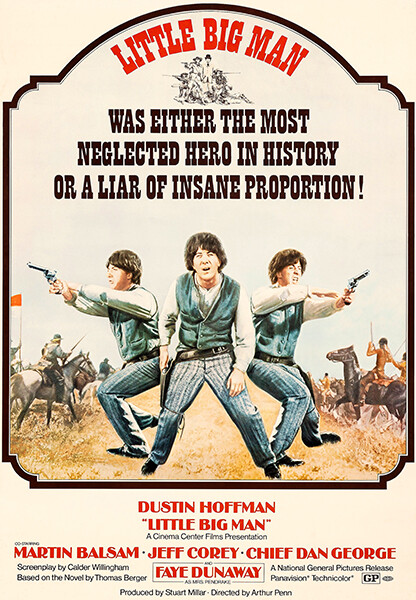
Little Big Man (1970) Poster
LITTLE BIG MAN (1970) A−
dir. Arthur Penn

At 121, Jack Crabb (Dustin Hoffman) hasn’t outlived the truth. He’s just learned how to bend it until it fits. Jack swears he’s done it all. He was raised by the Cheyenne, learned gunslinging from Wild Bill Hickok himself, traveled with his sister before she ditched him to run with outlaws. He even claims to be the only white man who walked away from the Battle of Little Bighorn alive. Of course, if you believe any of this. But whether you do or not, you’re already seated, and he’s already talking. Might as well listen. And what you hear is part fable and part confession, with a good, healthy dose of cultural indictment.

The film unfolds as an extended flashback of crooked frontier history to a deferential historian who hangs onto every word like gospel. What follows is a kind of westward Forrest Gump—except sharper and stranger, funnier and far more satirical. Jack moves through identities like he’s rifling a costume trunk. He was a frontier orphan, a dime-store prophet, a drunk, a dud, and a very poor scout. Whenever he collapses into tragedy, he often emerges back into a farce. Then the farce will limp back into tragedy—and he’ll feel nastier for the trip. The film is rife with contradictions, but they also feel deliberate, as if Jack is testing exactly what his audience is willing to swallow.

What makes the film infectious is its sense of humor—genuine, strange, sometimes accidental. A preacher’s wife with creative ideas about sin. A horse that refuses to play hero. But underneath the irreverent chuckles runs something sobering: the destruction of Native American life by white settlers. Jack doesn’t editorialize; he just remembers.

Hoffman is quietly remarkable, working a balance between a strange innocence and fatalism with hardly a change in breath. The performance from Richard Mulligan as Custer exists on the other end of the spectrum—a performance so delirious and deranged as the doltish general that he nearly steals the movie.

A hilarious movie first, a thoughtful movie second—even if the facts are crooked, and the tone likes to wander off. This is storytelling from a storyteller who embellishes not necessarily to deceive or to puff himself up. Perhaps he does it so that you remember the parts of history that he deems worth remembering. Maybe it’s stories like these that are best way to learn from history. Call Little Big Man witness. Call it invention. Or maybe just take it for what it is. History told by the last man alive who actually remembers this stuff.

Starring: Dustin Hoffman, Faye Dunaway, Chief Dan George, Martin Balsam, Richard Mulligan, Jeff Corey.
Rated PG-13. National General Pictures. USA. 139 mins.
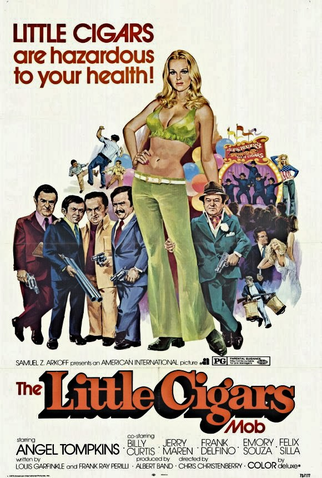
Little Cigars (1973) Poster
LITTLE CIGARS (1973) C
dir. Chris Christenberry

You don’t discover Little Cigars so much as trip over it. A crime caper built for the bargain bin. A carnival sideshow by way of a TV-movie fairy tale. The heroes, or anti-heroes as it were, are a troupe of little people who perform novelty acts for crowds. And while the crowds are good and distracted, a few others mill about and quietly pick pockets. The scam runs smoothly until they meet Cleo (Angel Tompkins), a tall, leggy drifter with big plans. She sizes up their act and pitches an upgrade. Why stop at wallets when you can go for banks? Soon she’s their giant, buxom crime boss.

Billy Curtis plays Slick, the troupe’s ringleader and also Cleo’s uneasy partner—business and otherwise. Think Bonnie and Clyde by way of Snow White. That is, if Snow White had a thing going with Doc. It’s more awkward than it sounds.

While the setup might be unique enough to keep you curious, I couldn’t quite decide if this was more or less exciting than watching a tax audit. Further, the dialogue is so clunky that it wouldn’t even pass for a Tuesday-night rerun.

Ultimately, this film is too amateur-hour to recommend. It has an exploitation streak, but watch it and you’ll either feel confused by it or embarrassed for it. I will say, in its defense, there’s at least a strange kind of sincerity buried in it. This is a movie about outsiders. It’s just too bad it doesn’t work.

Starring: Billy Curtis, Angel Tompkins, Felix Silla, Jerry Maren, Todd Susman, Emory Souza, Jon Cedar, Phil Kenneally, Joe de Santis, Frank Delfino.
Rated PG. American International Pictures. USA. 92 mins.