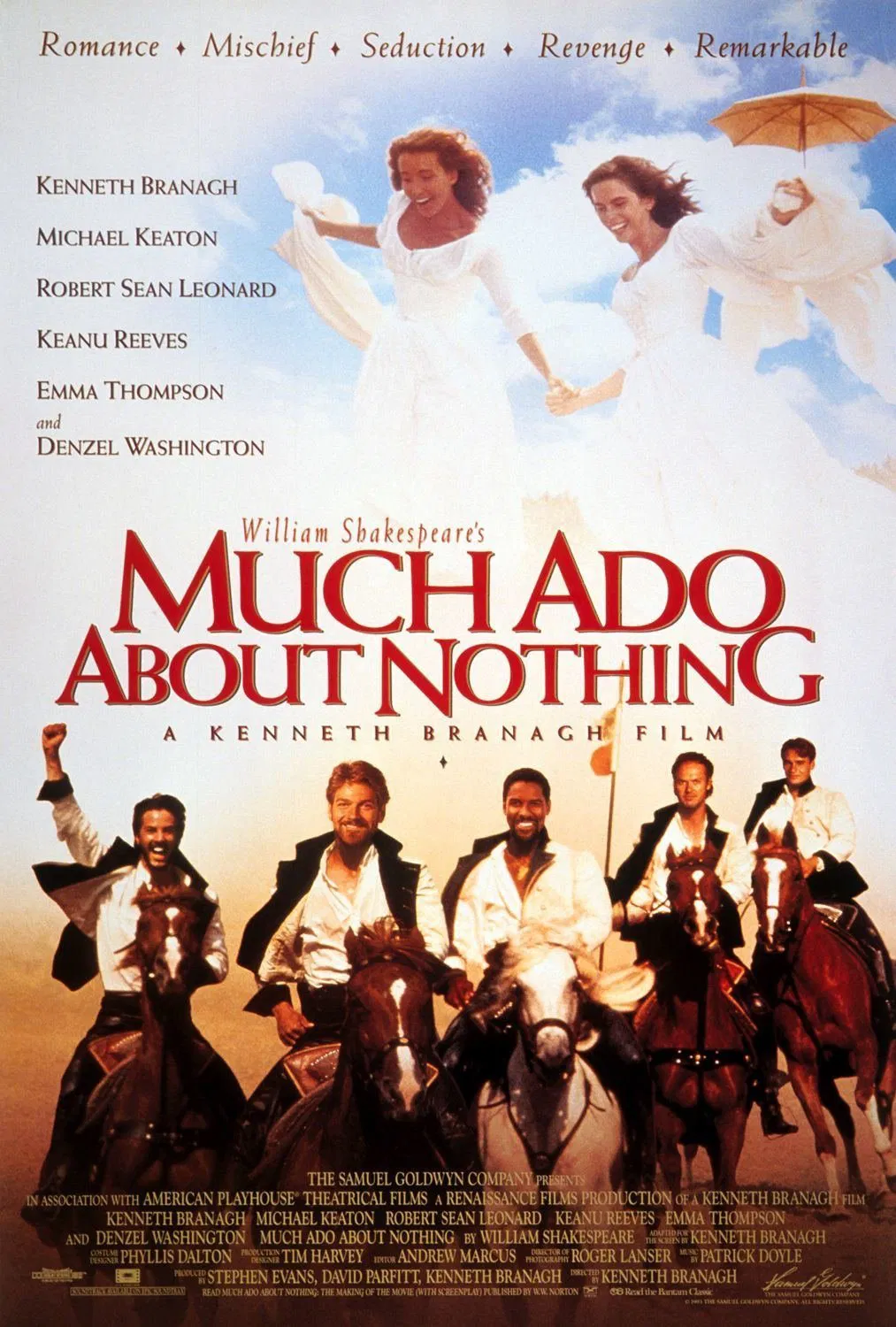
Sunny, fast-talking, and occasionally tipsy. Kenneth Branagh, who both directs and stars in this Shakespeare adaptation, seems perfectly happy to trade gravitas for good company, treating this material with the sort of light-on-its-feet affection and eagerness that a drama student might have who finally gets to play the lead.
Branagh plays Benedick—a smug, over-articulated bachelor whose allergy to love gets louder the closer it creeps toward him. Emma Thompson plays Beatrice, his love interest, who is able to slice through him with a kind of bone-dry precision that she can do better than anyone else, with lines flung at him like darts tipped in irony. Together, they make bickering look aerobic—trading barbs while inching closer to something neither wants to admit.
Claudio (Robert Sean Leonard) and Hero (Kate Beckinsale), the decorative couple, hover in the background. They’re not so much involved in a romance as they are a plot device waiting to be sabotaged, which is obliged by Keanu Reeves, who glowers his way through the film as Don John, like a goth left alone at prom. Don kicks off a smear campaign against this venerable couple, accusing Hero of sleeping around. Denzel Washington lends his usual quiet command as Don Pedro, Don John’s nobler brother. Michael Keaton shows up as a bug-eyed constable with all the grace of a man who’s been locked in a broom closet too long. No character in this film ever seems to be on quite the same page, but they all operate in tones that converge into something that holds together surprisingly well—a sunny, sincere, and frequently ridiculous conglomeration of personalities.
While Much Ado About Nothing isn’t Shakespeare’s deepest work, this adaptation is fleet and flirty—perfectly content to gallop playfully so long as the wine keeps flowing. Branagh’s trick is that he doesn’t treat the material like scripture as much as he treats it like a party that’s been going on for a little too long. And that turned out to be the right instinct.